
Infinity Productions × Renders On Demand
Designing Connected Experiences for CGI
Production and On-Demand RenderingDesigning Connected Experiences for CGI Production and On-Demand Rendering
View Shipped Work Infinity ProductionsView Shipped Work RendersOnDemand
Role : Product Designer
Timeline : Jun 2024 - Nov 2025
Platform : Desktop website
Scope : Research > IA Flow > Responsive Design > Handoff
Two Platforms, Two Distinct Experiences
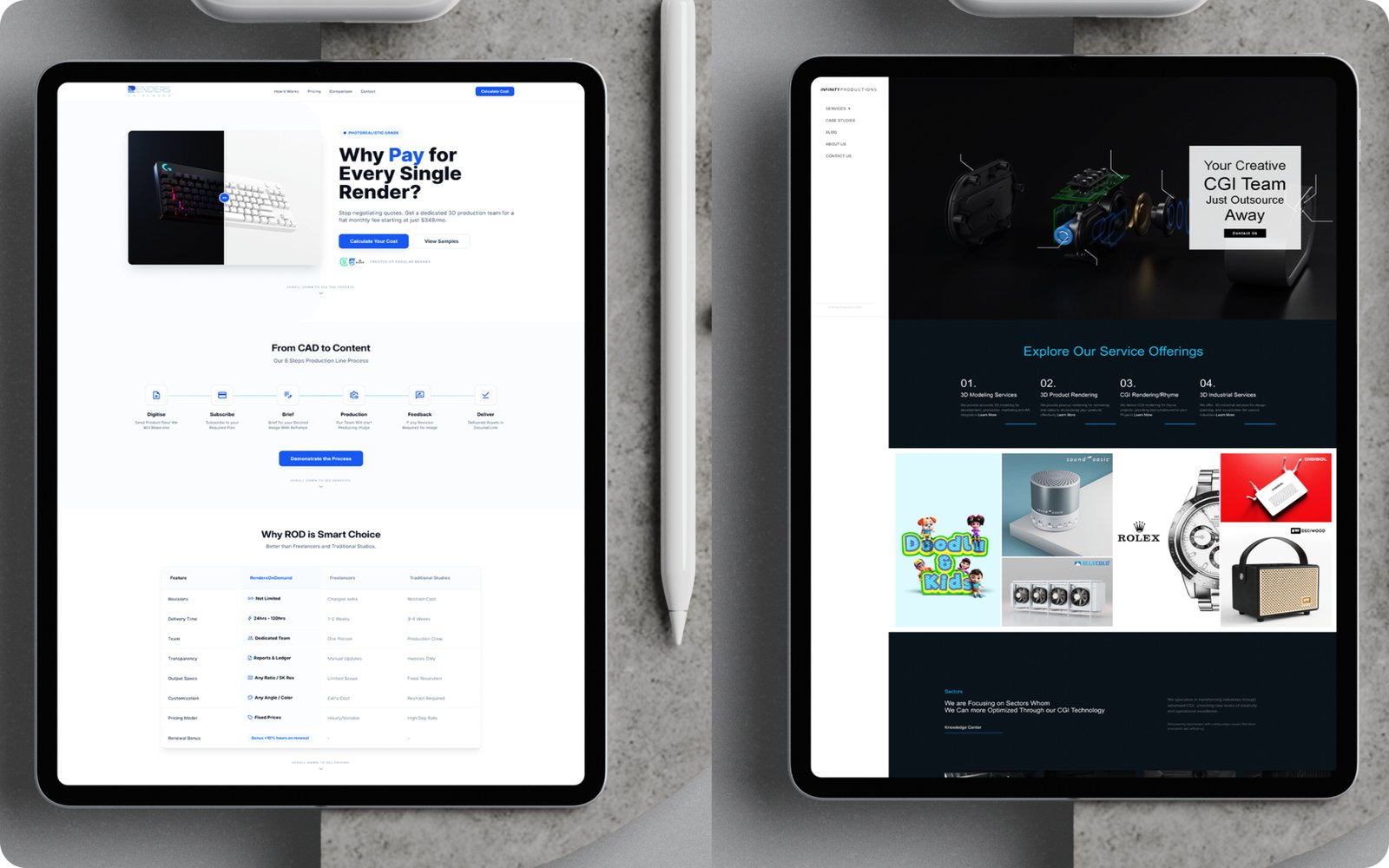
Infinity Productions and RendersOnDemand share the same CGI production capability but serve different customer needs. Infinity Productions helps enterprise clients
evaluate the company’s expertise and project experience. RendersOnDemand helps customers select a rendering service, understand requirements, estimate scope,
and start a project.
Building a Clearer Enterprise CGI Website
Infinity Productions provides 3D modeling, product rendering, CGI rendering, and industrial visualization services across eight industries. The existing website showed
strong visual work, but it was difficult for visitors to understand the company’s services, industry experience, and project capabilities.
The Challenge
Enterprise clients needed to quickly understand:
What services Infinity Productions offered
Whether the company had relevant industry experience
How it approached technical CGI projects
How to start a project conversation
Design Goal
Help enterprise clients explore our services and understand the value we provide. Guide them toward submitting a confident, well-informed project inquiry.
Capability → Industry Relevance → Project Evidence → Contact
01. Stakeholder Alignment
Aligned with the team on business goals, service positioning, customer
needs, and inquiry requirements.
02. Competitive Review
Reviewed competitor websites to identify effective service, project,
and conversion patterns.
03. Design Strategy
Organized the page around service benefits, target clients, process,
project examples, and consultation.
04. Handoff and Implementation Review
Delivered responsive designs and reviewed the implemented page for
layout, hierarchy, and mobile consistency.
The Gaps in the Existing Experience
The existing structure made it harder for potential clients to evaluate the company and move forward.
Unclear Service Structure
Four CGI services were presented without a clear hierarchy.
Limited Industry Relevance
Visitors could not easily find work related to their industry.
Weak Project Storytelling
Project pages lacked context and explanation.
Disconnected User Flow
The website did not clearly guide users from service discovery to project inquiry.
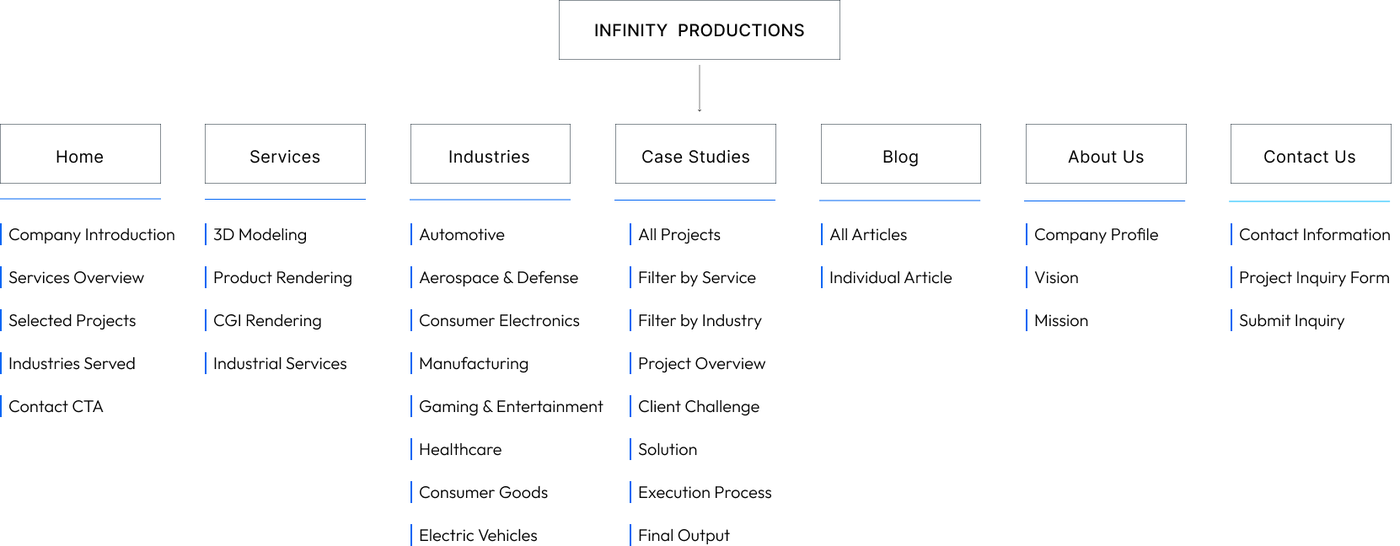
The content was structured to create a clear and logical flow throughout the website. Key information was grouped into sections based on user needs, making it easier to
explore the company, services, projects, and contact information. The navigation was kept simple so users could quickly find what they were looking for.
01
Organized the Website Around Four Core Services
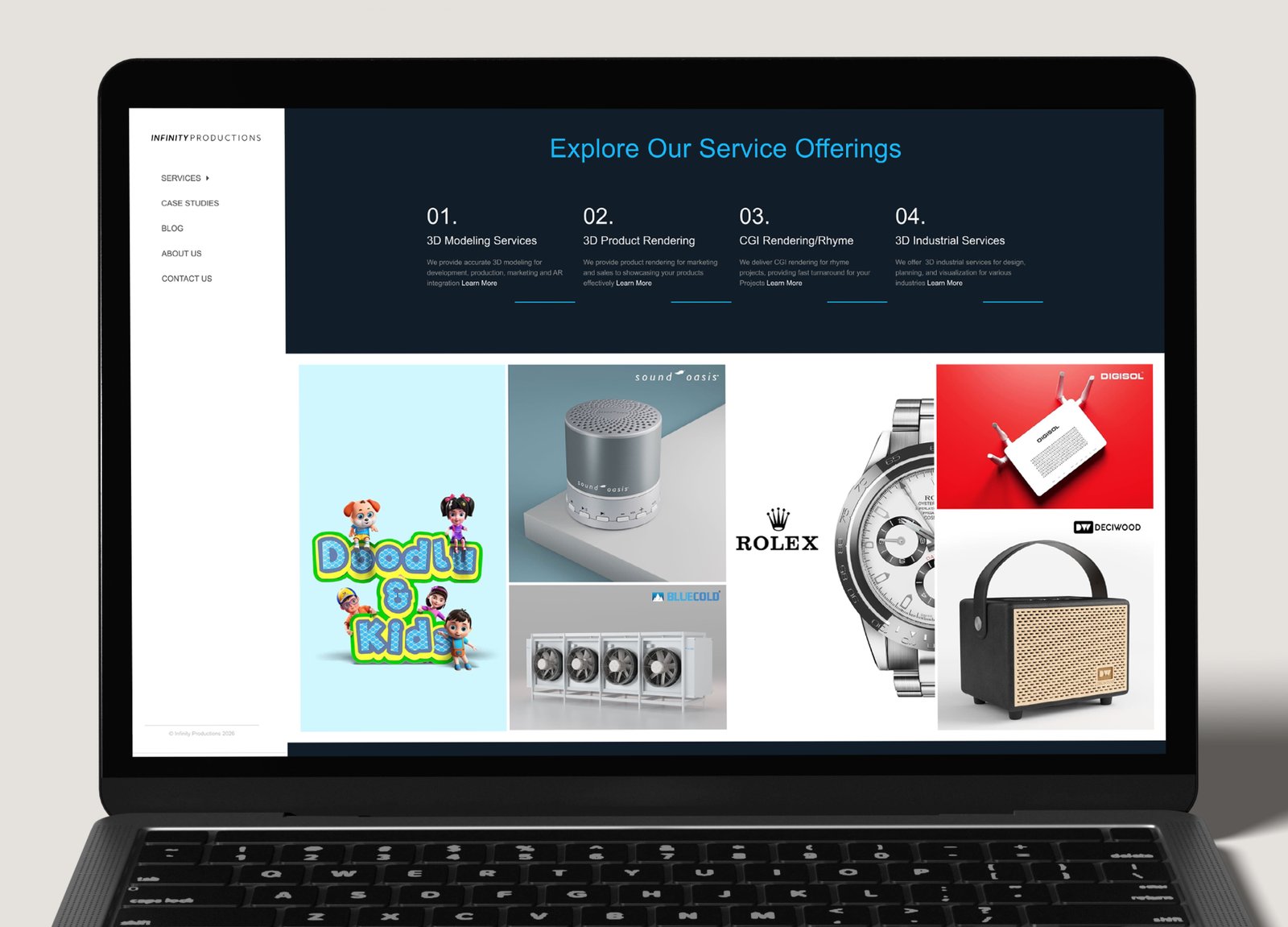
The website’s capabilities were reorganized into four clear service
categories: 3D Modeling, Product Rendering, CGI Rendering, and Industrial
Services. Each service page explained the capability, common use cases,
process, related work, and next step, helping visitors quickly find the
service relevant to their needs.
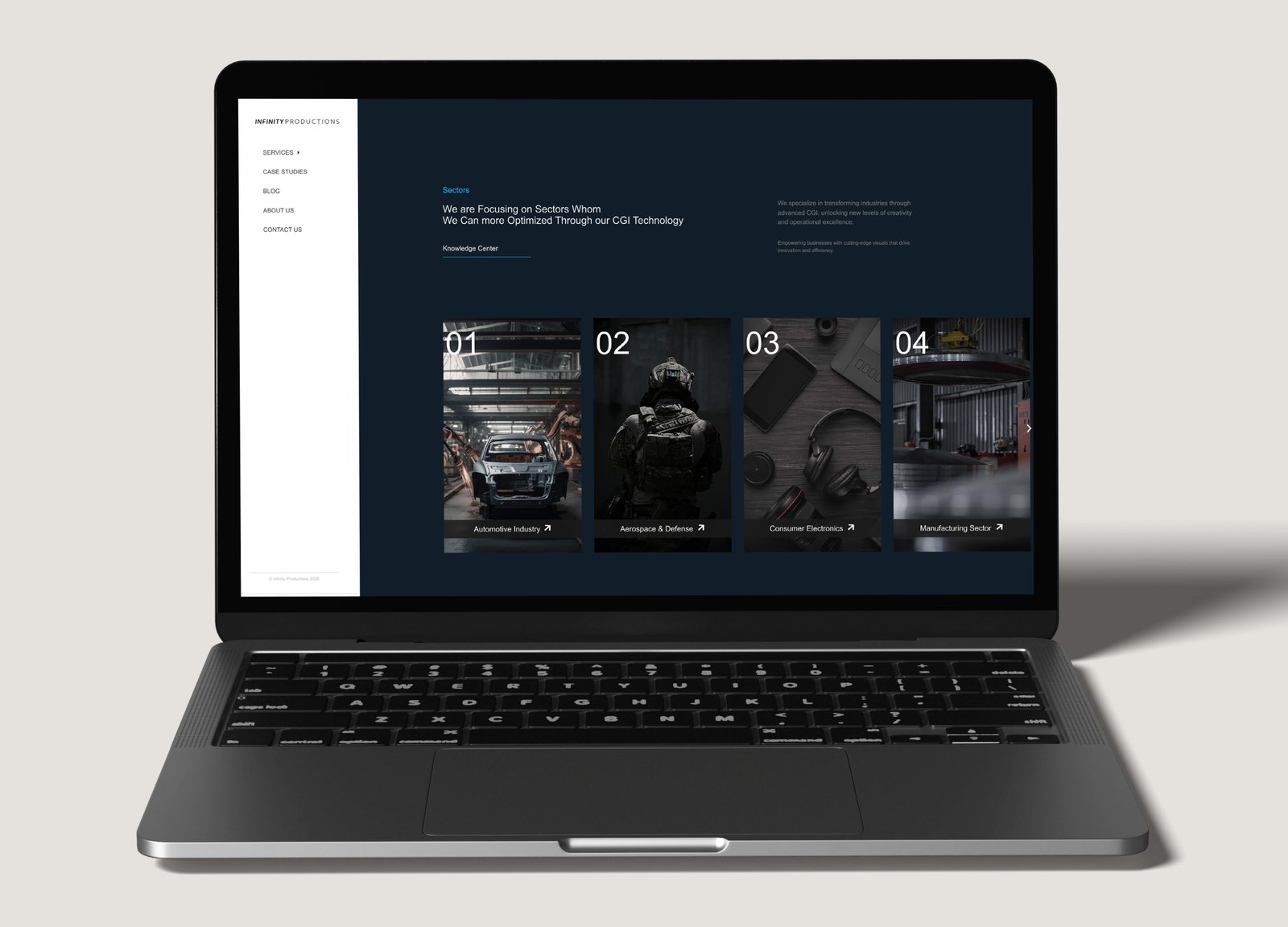
02
Industry-Specific Pathways
Introduced eight industry pathways so visitors could explore services
and projects relevant to their sector. This reduced the need to
understand technical CGI terminology and helped clients quickly see
whether the company had experience with businesses similar to
theirs.
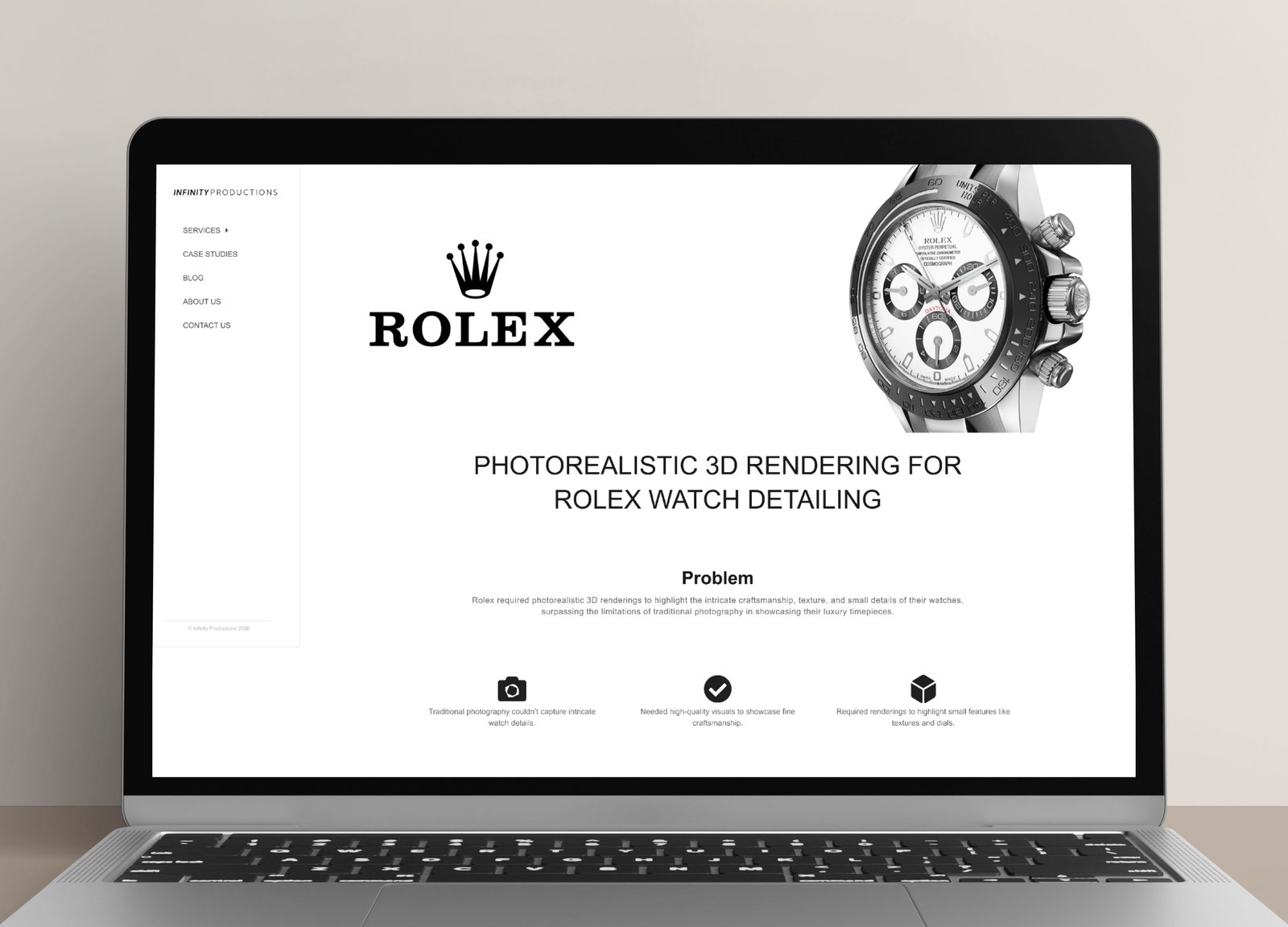
03
Turn Visuals Into Project Stories
Instead of using simple image galleries, I created a consistent project
structure based on Challenge, Solution, Execution, and Final Output.
This showed not only the quality of the final work but also the team’s
process, technical expertise, and problem-solving ability.
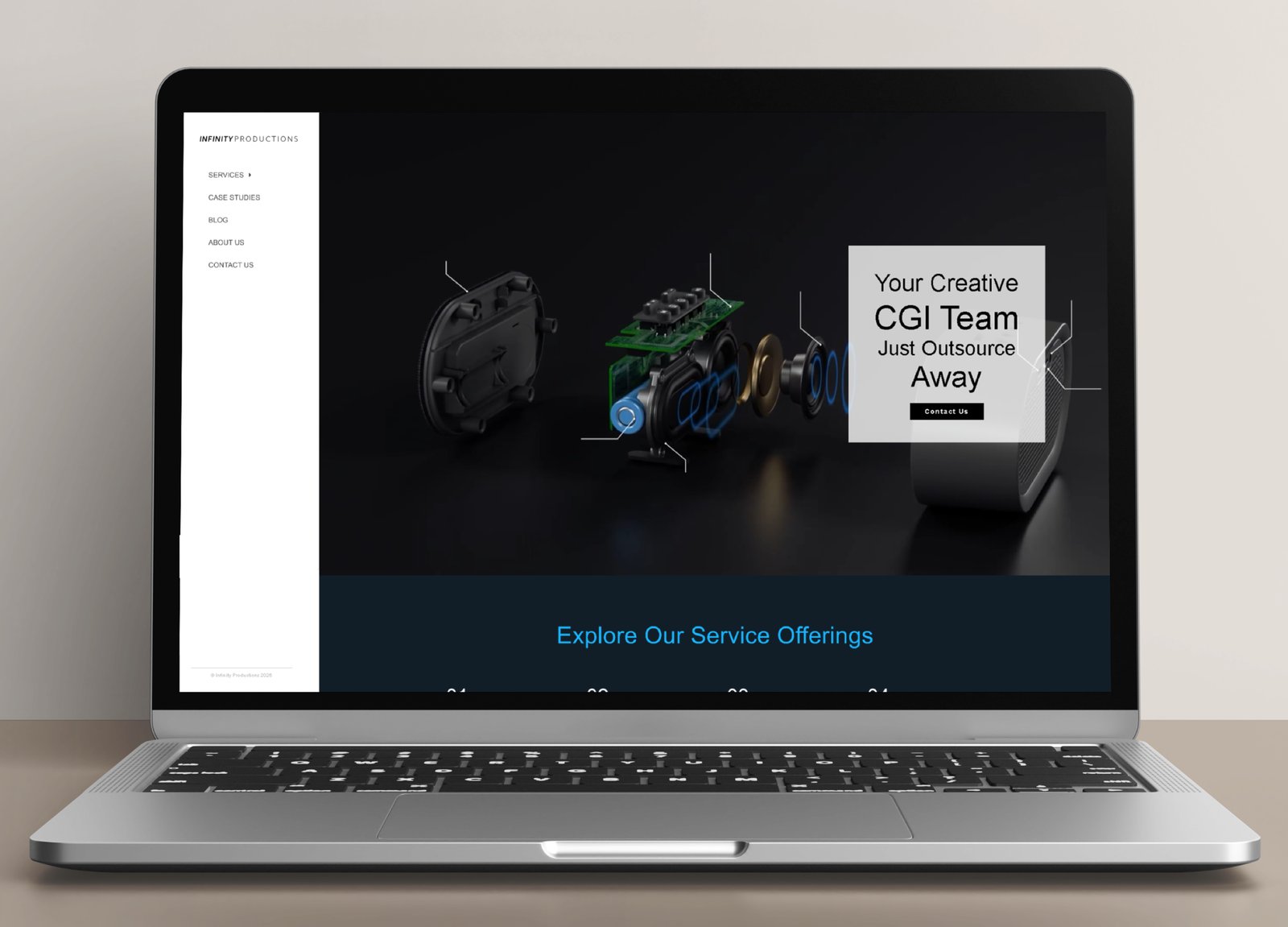
04
Streamline the Homepage Experience
The homepage was simplified around three primary actions: exploring
services, reviewing selected work, and browsing industry experience.
Contact options remained visible but secondary, allowing visitors to
understand the company’s capabilities before moving toward an
enquiry.
For Infinity Productions, the main challenge was not automating sales but building trust with enterprise buyers. Before making an enquiry, clients needed to understand
whether the team had the technical expertise, industry knowledge, and delivery capability required for complex projects. The website was therefore designed to
answer one key question: “Can this team meet our business and technical requirements?” Clearer service categories, industry-specific pathways, detailed project
stories, and a focused enquiry journey helped clients evaluate the company with greater confidence.
Designing a guided way to configure, estimate, and start a CGI rendering project
RendersOnDemand is the sister company of Infinity Productions. RendersOnDemand was created to make rendering services easier to understand and purchase. The
project included understanding the business model and customer needs, defining the information architecture and user flows, creating wireframes and UI designs,
designing responsive screens, and preparing the final handoff for development.
CGI projects need more details than a normal service request. The team needs to know things like whether CAD files are ready, how complex the product is, how
many images are needed, and what type of output the client wants. Since customers may not know how to explain all of this clearly, a simple contact form could lead
to missing information and extra follow-up.
Design Challenge
How might we simplify the CGI request process so users can easily understand their options, choose the right requirements, and submit a clear project request?
Business Understanding
Discussions with the business and production teams helped clarify how CGI projects were planned, what information customers needed to
provide before submitting a project request, and where confusion usually happened.
Customer Needs & Constraints
Customers had different levels of 3D knowledge. Some already had CAD files, while others only had a physical product. The experience
therefore needed simple language, clear explanations, step-by-step questions, and support for both simple and complex projects.
Competitive Analysis
Similar CGI and rendering websites were studied to understand how they presented services, pricing, requirements, and project steps. Many
relied mainly on basic contact forms.
Design Strategy
The service model was organized into three clear customer paths: Production Subscription, Product Digitization, and Per-Image
Rendering. These became the foundation of the website structure.
01. Customers Needed Help Choosing a Service
Customers had different needs, such as ongoing rendering work, digitizing
products, or a one-time project
Design response : Create three clear service pathways instead of one
generic inquiry.
02. Technical Requirements Were Hard to Describe
Users did not always know how to describe things like CAD files, product
complexity, variations, or final output requirements.
Design response : Break technical requirements into simple guided
questions that are easier to understand and answer.
03. Pricing Needed More Context
The cost of rendering depends on factors like project size, complexity,
number of images, and required variations.
Design response : Provide pricing guidance and estimate ranges instead
of showing one fixed price for every project.
04. Generic Forms Created Weak Project Briefs
Simple open-text forms often missed important project details, which
made it harder for the team to understand the request.
Design response : Create a structured project estimator that collects the
right information before the user submits an inquiry.
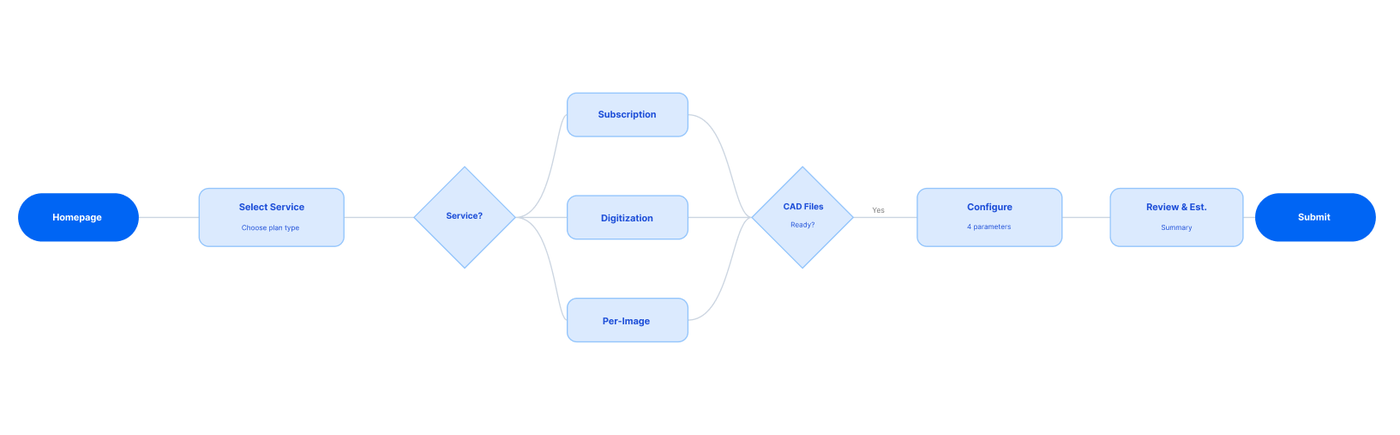
The flow maps the user’s journey from exploring rendering services to selecting an option, providing project details, and submitting a request. Each step is arranged
around the user’s needs, with clear actions and transitions between stages. This creates a more direct and efficient path to completing a rendering request.
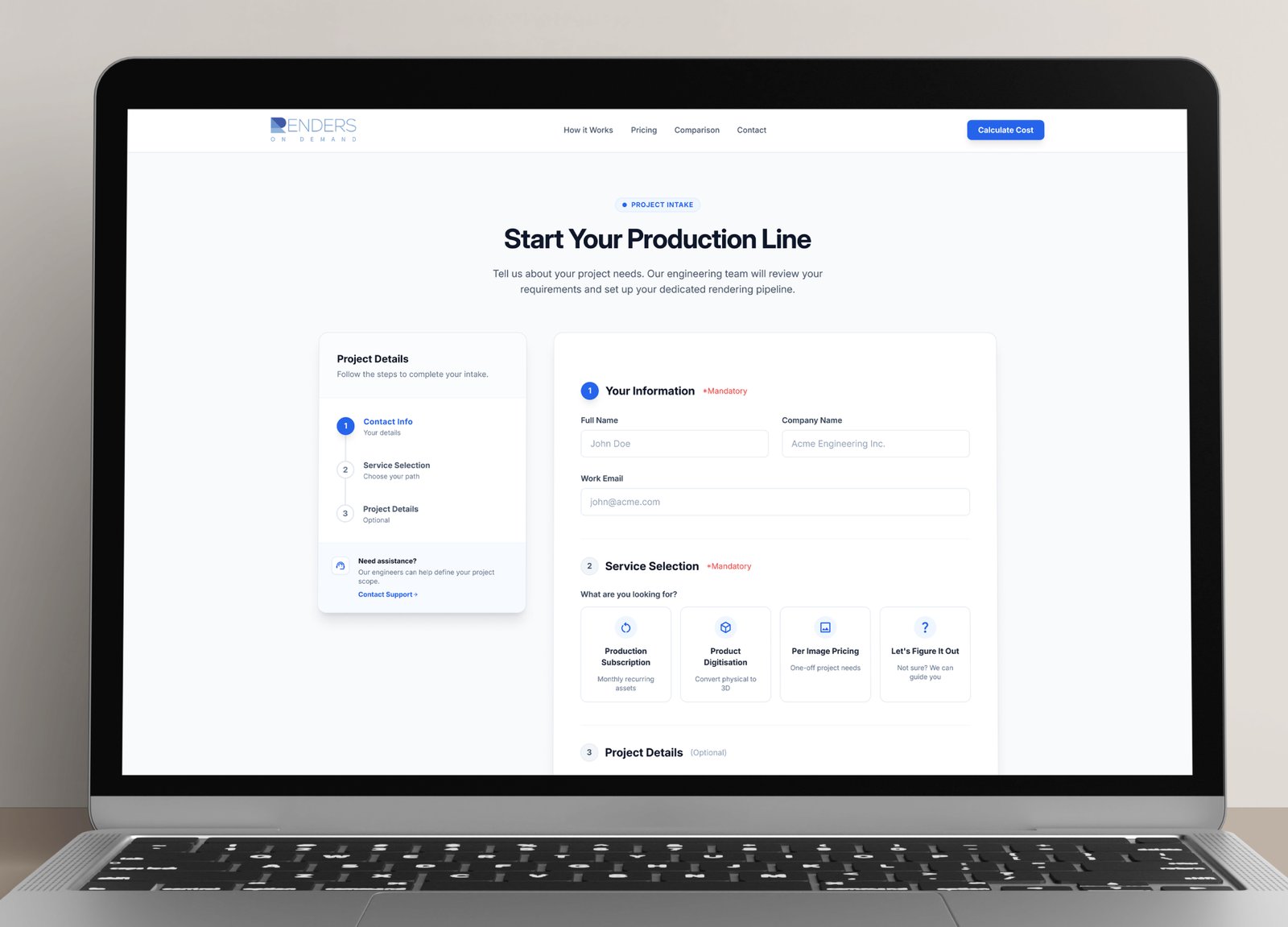
01
Service Selection
The experience starts with the customer’s actual need instead of
technical CGI terms. Users can choose Production Subscription for
ongoing work, Product Digitization for creating 3D assets, or Per-
Image Rendering for one-time projects. This gives customers a clear
starting point and helps them quickly find the service that fits their
project.
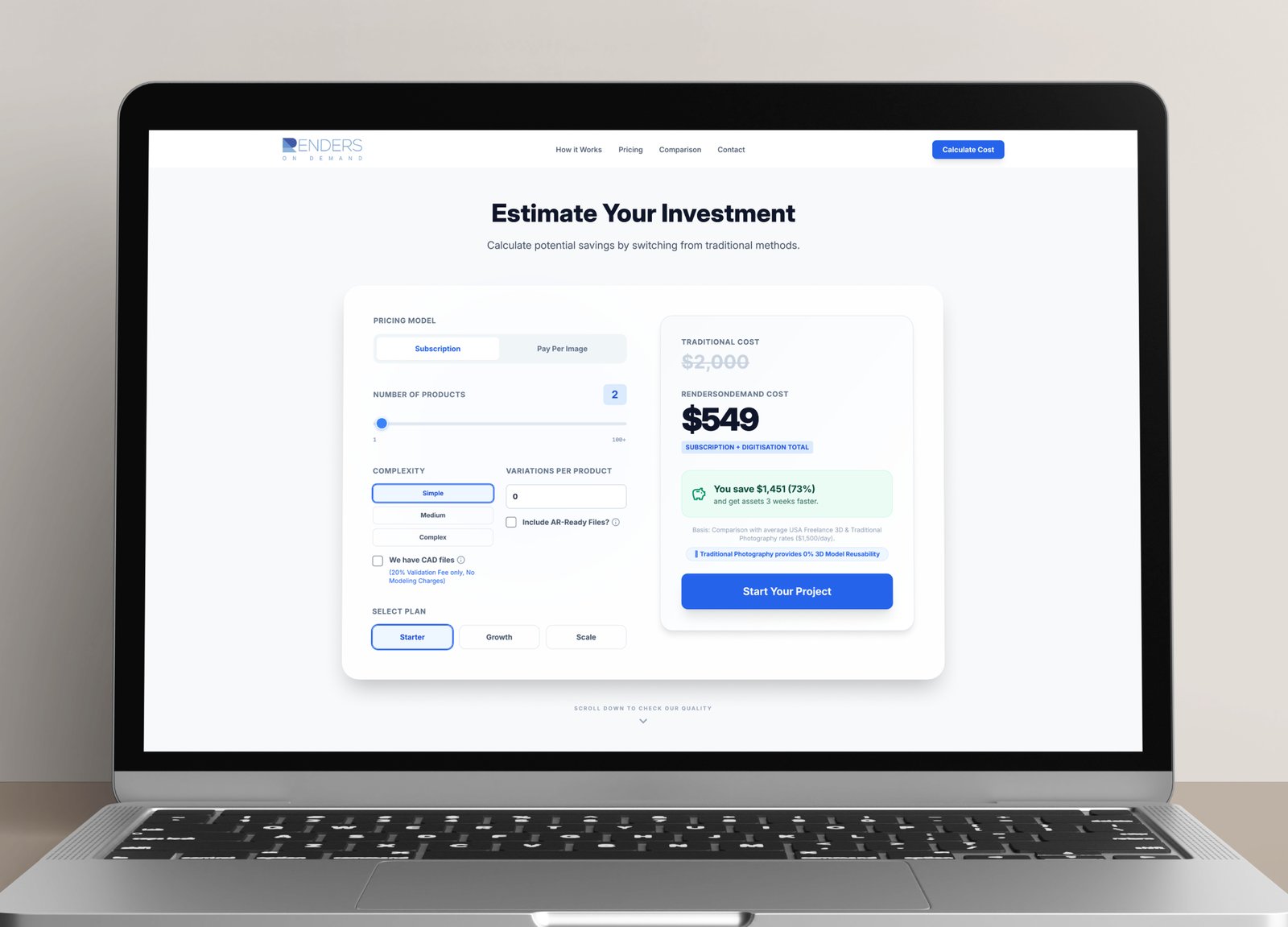
02
Guided Estimator
The guided estimator helps customers explain their project through
simple step-by-step questions. Instead of asking users to write
everything in one open text box, the flow asks about CAD files,
product complexity, number of variations, and final output needs.
This makes technical information easier to understand and helps the
team collect better project details.
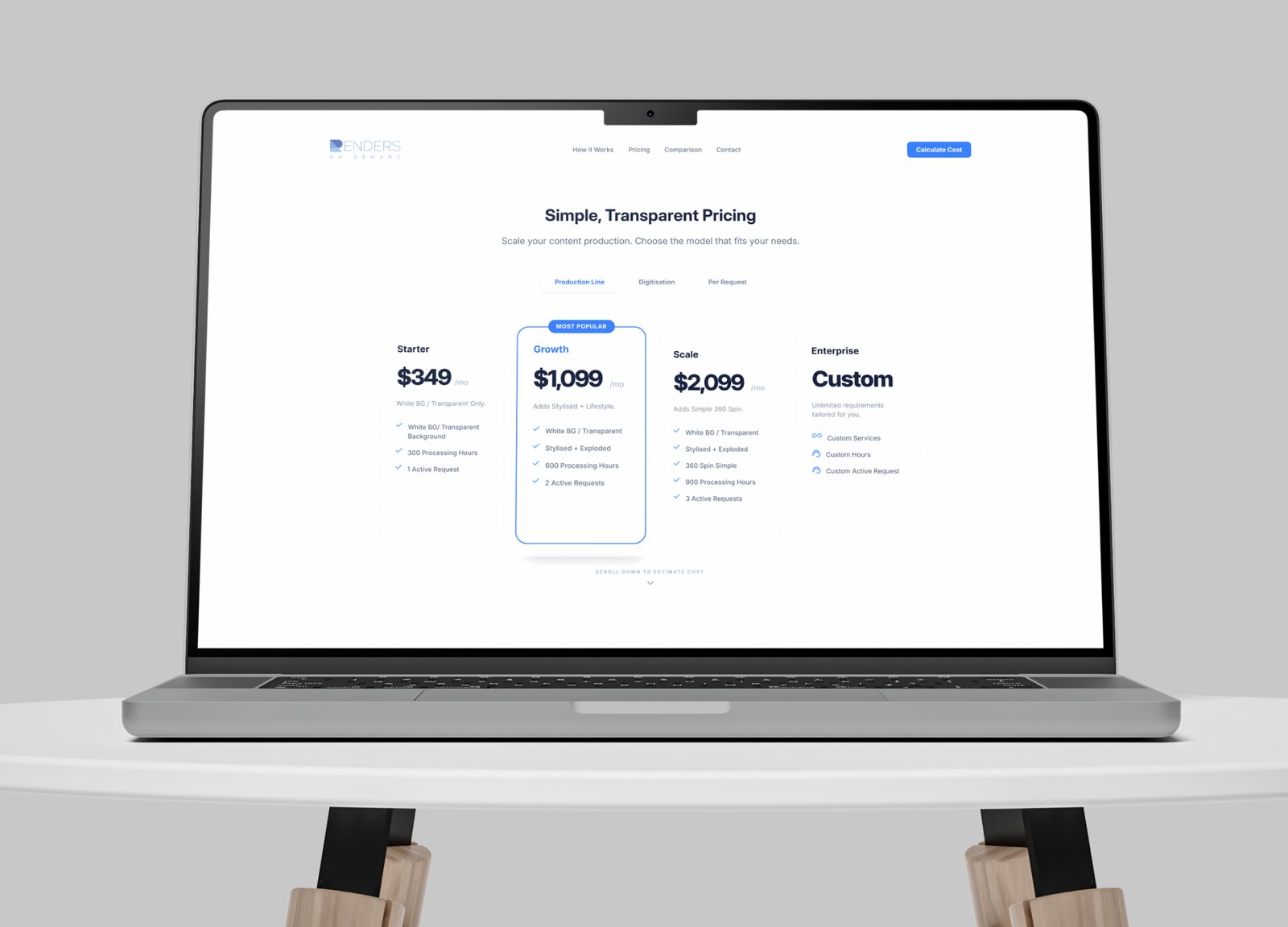
03
Pricing Experience
Rendering prices can change depending on the size and complexity
of the project. The pricing experience was organized into Starter,
Growth, Scale, and Enterprise options to help customers understand
different levels of service. The purpose was not to show an exact
price, but to give users enough information to understand which
option may fit their needs before contacting the team.
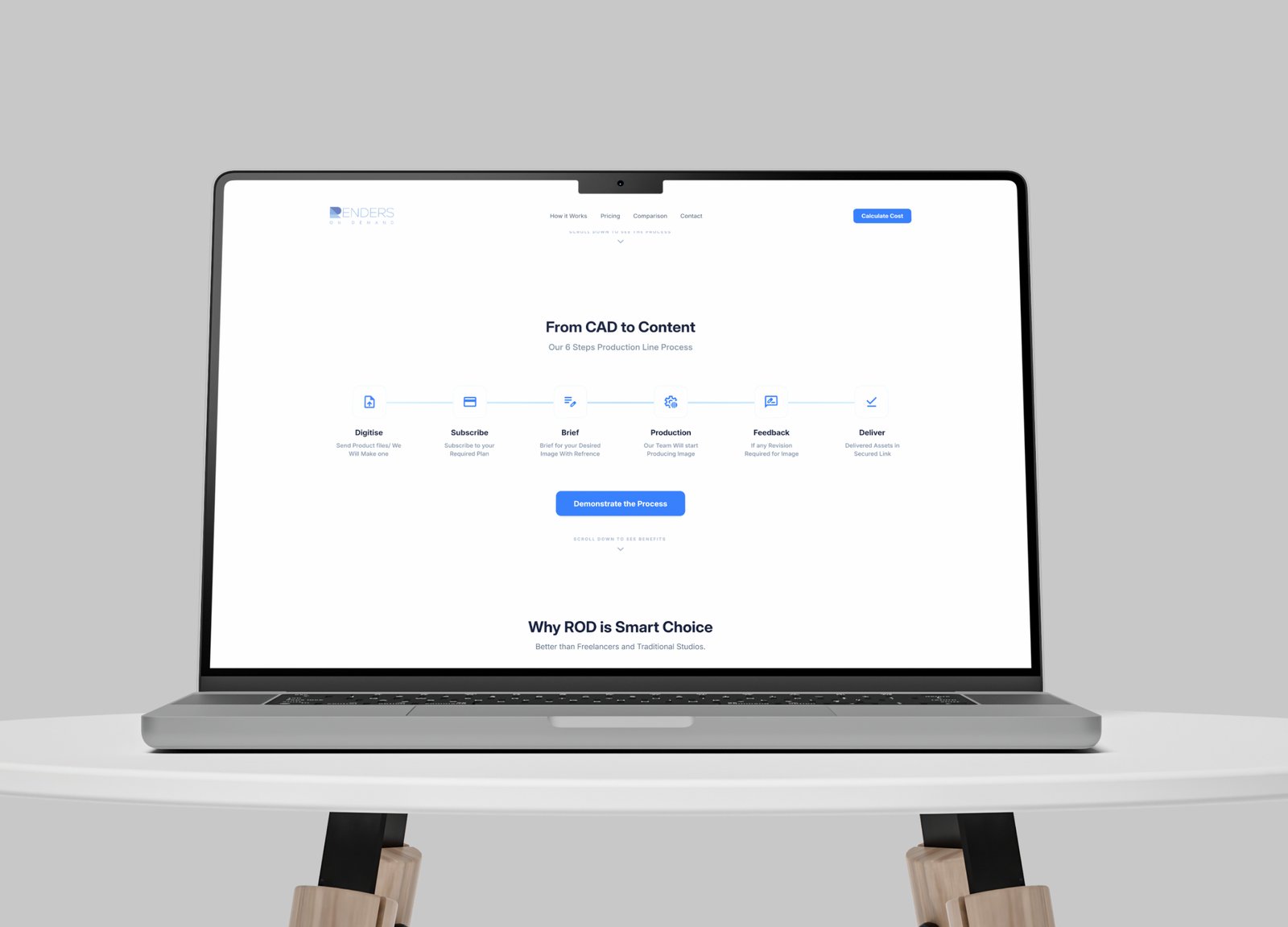
04
Production Transparency
Customers may not know what happens after they submit a rendering
project. A simple six-step process was added: Asset Intake,
Validation, Production, Review, Revision, and Delivery. This makes the
production process easier to understand and shows customers what
to expect from the beginning of the project to the final delivery.
The biggest challenge was finding the right balance of technical information. Showing too little could leave customers unsure about their project requirements, while
showing too much at once could make the experience confusing. To solve this, the experience used progressive disclosure, where customers only saw the information
needed for the decision they were making at that step.
Next Project
Arizona Yoga Co.Coffee? Let's Build Something Thoughtful.
I’m open to conversations about product design, UX strategy, AI experiences, and teams building
work that genuinely helps people.
Radhika Sunil Autade
Phoenix, Arizona
© 2026 Radhika Sunil Autade. All rights reserved.